Quick answer
A proposed heat pump can meet your winter heating needs only if its usable heating output matches your home’s calculated heat loss at the outdoor temperature being evaluated. Compare the exact indoor/outdoor equipment combination, not just its advertised tonnage. If output falls short, the design needs supplemental heat—or a different equipment or building-envelope strategy. DOE’s Building America guidance recommends comparing heating loads with extended equipment performance data. (basc.pnnl.gov)
Before accepting a bid: Request the load calculation, low-temperature capacity data, and a written explanation of when backup heat will operate.
1. Start with your home’s heating load and local design temperature
The first question is not “How many tons do I need?” It is: How much heat does this particular home need under the chosen winter design conditions?
ACCA’s Manual J provides a residential load-calculation method. Manual S then addresses equipment selection using those loads, local design conditions, and manufacturer performance data. They answer different questions: the building determines the load; the equipment data show what can meet it. Sources: ACCA Manual J and ACCA Manual S.
Ask your contractor to identify:
- The outdoor heating design temperature and its weather-data source.
- The indoor temperature assumed in the calculation.
- The calculated whole-home heating load, in Btu/h.
- Whether the proposed system serves the entire home or selected rooms.
- Whether the calculation reflects any planned insulation, window, or air-sealing improvements.
ENERGY STAR recommends using geographically appropriate weather-station data, including a 99% heating design temperature, for its residential design process. The design temperature is a sizing reference—not a promise that colder weather cannot occur. Ask separately how the system will handle conditions below that reference. (energystar.gov)
Treat an unexplained square-footage rule or a copy of the old equipment size as an incomplete answer.
2. Read low-temperature capacity—not just the efficiency label
Three numbers answer three different questions:
| Information | What it tells you |
|---|---|
| Heating capacity, in Btu/h, at a stated outdoor temperature | How much heat the equipment can deliver under those conditions |
| Coefficient of performance, or COP | Heat delivered relative to electricity consumed at the stated operating condition |
| HSPF2 | Heating efficiency over a standardized heating season |
A seasonal efficiency rating does not tell you the available output on your coldest design day. Likewise, a cold-climate designation is not a home-specific sizing approval. You still need equipment performance data matched to the building load. (bsesc.energy.gov)
Request the exact outdoor unit, indoor unit or coil, and applicable performance document. Look for capacity near your local design temperature—not merely at 47°F or 17°F. If the necessary temperature falls between published points, the designer may use interpolation where appropriate; it should be identified as an estimate. (basc.pnnl.gov)
Also distinguish rated from maximum output. Manufacturer tables can list both at the same temperature. For example, the Mitsubishi Electric document used below lists different rated and maximum capacities at 17°F. Comparing one bid’s rated output with another bid’s maximum output would not be a like-for-like comparison. (mitsubishitechinfo.ca)
3. Worked example: checking a hypothetical Minneapolis home
Consider a hypothetical home in Minneapolis, Minnesota. ENERGY STAR’s 2019 design-temperature reference lists −11°F for Hennepin County. We will use that published reference for this example; an actual project still needs an appropriate design-condition selection. (energystar.gov)
Suppose a professional load calculation for this hypothetical home returns:
- Indoor design temperature: 70°F.
- Outdoor design temperature: −11°F.
- Heating load: 36,000 Btu/h.
These are example assumptions, not measurements from an actual house.
For a documented equipment comparison, Mitsubishi Electric’s October 2022 Canadian submittal for the PEAD-A36AA7 indoor unit with SUZ-KA36NAHZ outdoor unit publishes:
| Outdoor temperature | Published maximum heating capacity |
|---|---|
| 17°F | 37,000 Btu/h |
| 5°F | 37,000 Btu/h |
| −13°F | 29,600 Btu/h |
The document’s heating test conditions specify 70°F indoor dry-bulb temperature. This historical pairing illustrates the comparison method; it is not a current U.S. product recommendation or availability claim. (mitsubishitechinfo.ca)
Using straight-line interpolation between −13°F and 5°F:
Estimated output at −11°F
= 29,600 + [(−11 − −13) ÷ (5 − −13)] × (37,000 − 29,600)
≈ 30,400 Btu/h
Illustrative design-condition shortfall
= 36,000 − 30,400
≈ 5,600 Btu/h
On this simplified comparison, the heat pump alone would not cover the assumed design load. But that does not establish the final backup-heater size. The contractor must verify applicable performance corrections, equipment operating limits, defrost treatment, and the intended backup operating sequence. Interpolation estimates a point between published values; it does not establish actual field output. (basc.pnnl.gov)
Nor does a 5,600 Btu/h design shortfall reveal annual backup energy use. That requires an analysis across outdoor temperatures and operating conditions—not just one cold-weather point.
4. Separate capacity balance point, economic balance point, and lockout
These terms are related, but they are not interchangeable.
Capacity balance point: The outdoor temperature where the heat pump’s available output equals the home’s heating requirement. Below that point, supplemental heat is needed if the heat pump cannot meet the entire load. The point depends on both the house and the selected equipment. (handbook.ashrae.org)
Economic balance point: The temperature where the heat pump and an alternative heating source have equal operating cost under the assumptions used. Calculating it requires relevant electricity and fuel prices, heat-pump performance, and alternative-system efficiency. It need not equal the capacity balance point. (aceee.org)
Compressor lockout: A control setting that prevents heat-pump operation under specified conditions. A selected lockout can reflect capacity, operating cost, comfort, or equipment limits; it is not automatically proof that the compressor cannot physically operate below that temperature. (aceee.org)
Ask your contractor to label each temperature separately. “Backup starts at 20°F” is incomplete without an explanation of why—and whether backup supplements the compressor or replaces it.
5. Compare electric-resistance backup with dual-fuel backup
Electric-resistance backup uses electric heating elements, often installed in a ducted air handler. Resistance heat has a COP of approximately 1 at the heater: it converts electricity into heat rather than moving additional heat from outdoors. Its role and expected runtime therefore matter when evaluating an all-electric proposal. (bsesc.energy.gov)
Dual-fuel backup combines an electric heat pump with another fuel source, such as a gas, propane, or oil furnace. Controls determine which equipment operates based on factors including outdoor temperature, relative efficiency, and fuel cost. (feds.pnnl.gov)
Ask two separate sizing questions:
- Supplemental duty: What capacity is needed while the heat pump is still contributing?
- Replacement duty: What must the backup deliver when the compressor is off?
A heater sized only to fill a partial shortfall should not be assumed to cover the entire house without the compressor.
For bid comparison, request separate prices for the backup equipment, controls, and any required electrical or fuel-system work. Ask the contractor to explain what professional assessment supports those allowances. Do not assume either backup approach is universally cheaper; dual-fuel operating decisions depend partly on local energy prices and system performance. (feds.pnnl.gov)
6. Include defrost and outdoor installation conditions
A low-temperature capacity table is important, but it is not the entire winter operating story.
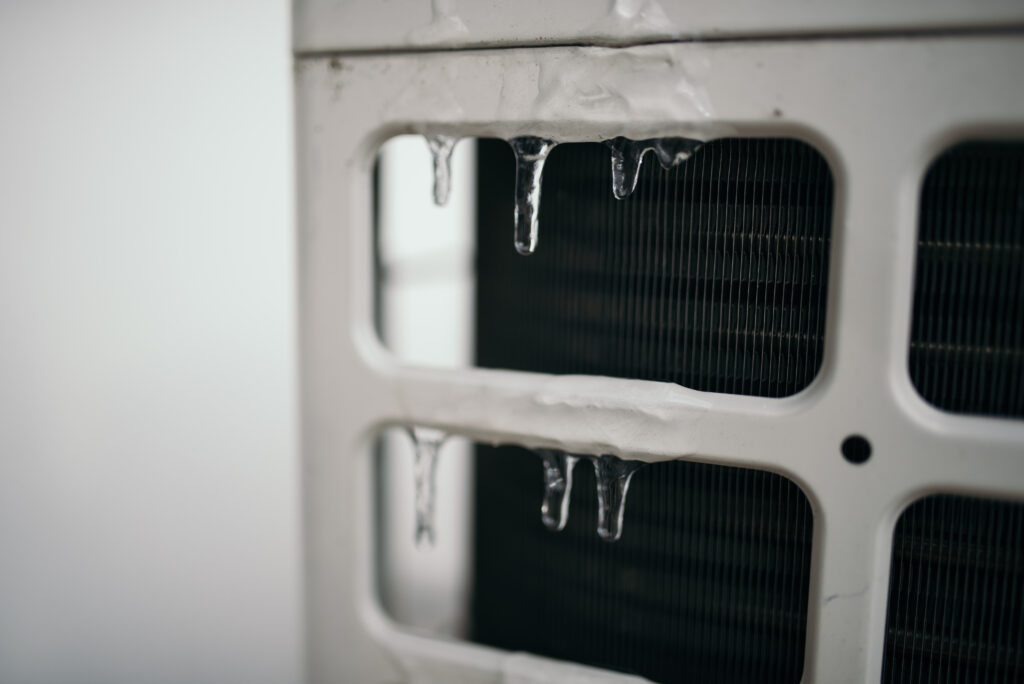
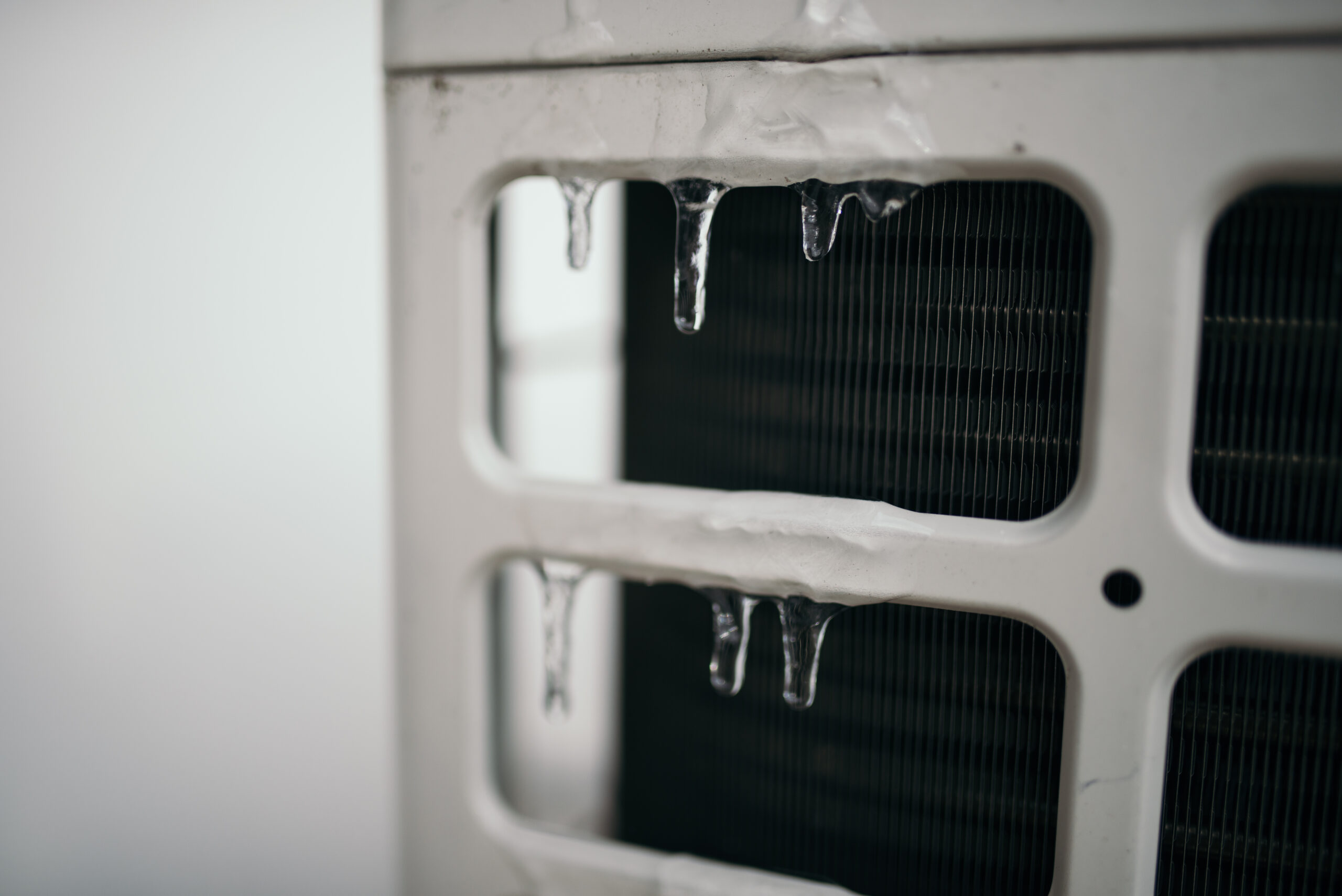
Frost can accumulate on the outdoor coil. During a conventional reverse-cycle defrost, refrigerant flow reverses so heat can melt that frost. Heating delivery changes during this process, and supplemental heat may operate to maintain comfort. (handbook.ashrae.org)
Ask:
- Does the performance information used in the proposal account for defrost, and how?
- What happens to indoor airflow and backup heat during defrost?
- How will meltwater drain without creating an icy walking surface?
- How will the installation preserve required airflow during snow accumulation?
- Is protection needed from roof runoff or falling snow?
DOE-hosted homeowner guidance emphasizes keeping outdoor airflow unobstructed and addressing snow accumulation and roof runoff with a qualified contractor. It also identifies persistent icing or abnormal operation as reasons for professional assessment. (bsesc.energy.gov)
Do not treat every appearance of frost as a failure. Equally, do not accept persistent heavy icing as something that must simply be tolerated. Follow the manufacturer’s instructions and have abnormal conditions assessed rather than attempting refrigerant, electrical, or mechanical repairs.

7. Use this checklist to compare proposals and avoid common mistakes
Request a short written design summary from each bidder:
| Ask for | What to check |
|---|---|
| Load calculation | Same building scope and indoor/outdoor design assumptions |
| Equipment identification | Exact indoor and outdoor model numbers |
| Winter performance | Capacity and input power near the selected design temperature |
| Backup design | Capacity, operating sequence, and conditions when the compressor is off |
| Controls plan | Separate explanations for auxiliary-heat activation, switchover, and lockout |
| Handover information | Actual settings and instructions for recognizing abnormal operation |
The first three items follow the load-to-equipment comparison described in DOE’s technical guidance. Written operating and backup settings also align with DOE-hosted homeowner handover guidance. (www1.eere.energy.gov)
Watch for these mistakes:
- “It operates below zero, so it will heat the house.” Operating capability and sufficient output are different questions.
- “Choose the largest unit to eliminate backup.” Excessive cooling capacity can cause cycling and humidity-control problems. Ask about summer performance and minimum output as well as winter maximum output. (handbook.ashrae.org)
- “The efficiency rating proves the winter capacity.” Seasonal efficiency and temperature-specific output describe different things. (bsesc.energy.gov)
- “We always use this switchover temperature.” Ask for the capacity or cost reasoning behind that setting. (aceee.org)
The proposal to favor is the one that makes its assumptions checkable: a documented load, documented cold-weather output, and a clear plan for any remaining heating requirement.