Quick answer: An HVAC replacement quote should identify the exact equipment, installation work, removal and disposal, permits, duct and electrical changes, startup testing, warranties, exclusions and total price. Ask the contractor to mark each item included, excluded, not applicable or allowance. Compare the cost of the same completed project—not just the equipment subtotal. Seattle’s homeowner guidance specifically recommends a breakdown covering equipment, labor, electrical upgrades, duct modifications, permit fees and potential extras. (seattle.gov)
This checklist is for U.S. homeowners replacing a furnace, central air conditioner, heat pump or related indoor equipment. Not every project needs every item. The goal is to make responsibility clear before signing.
1. Identify exactly what equipment you are buying
Ask for a written equipment schedule, not simply a brand name and “high-efficiency system.” Use this checklist:
| Quote line | What to request |
|---|---|
| Outdoor equipment | Manufacturer, complete model number, quantity and capacity |
| Indoor equipment | Furnace, air handler, evaporator coil or indoor-unit model numbers |
| Controls | Thermostat or controller model; whether existing controls remain |
| Backup heat | Whether included, what type and its specified capacity |
| Accessories | Filter cabinet, equipment pad, stand, pump or other included components |
| Performance | Published efficiency information for the proposed equipment combination |
| Substitutions | Your written approval before a different model is installed |
For a split-system air conditioner or heat pump, ask how the contractor verified compatibility between the indoor and outdoor equipment. For example, Daikin’s installation instructions for the equipment covered by its DZ14 manual require a manufacturer-approved, AHRI-matched system when replacing a condensing unit or air handler. That requirement belongs to those products; the contractor should use the instructions applicable to your proposed models. (daikincomfort.com)
Also ask why the proposed capacity suits your home. ENERGY STAR recommends sizing from the home’s actual characteristics rather than a rule of thumb. “Same size as the old unit” is not an explanation of the home’s current needs. Request a sizing summary and discuss uncomfortable rooms before approving equipment. (energystar.gov)

2. Define installation labor, removal and site access
Ask the contractor to describe the installation tasks even if labor is priced as a lump sum. You need a clear scope, not necessarily the contractor’s hourly rates or purchasing costs.
Request written answers to these questions:
- Which existing units and accessories will be removed?
- Does removal include refrigerant handling where applicable, haul-away and disposal?
- Which existing components will remain?
- Are delivery, lifting equipment and difficult-access labor included?
- Who protects floors, walls and landscaping?
- Who removes installation debris?
- Does the price include opening and restoring an access route?
Treat these as scope questions rather than assumptions. For example, if an indoor unit must pass through a small attic opening, ask the contractor to inspect that route and identify any access work before you accept the price.
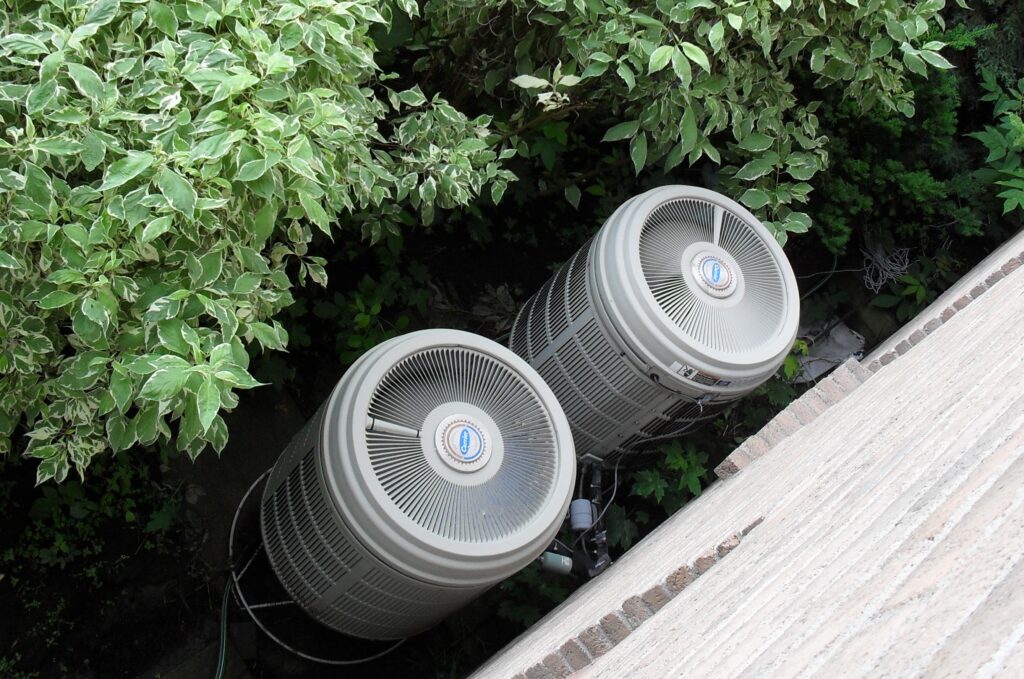
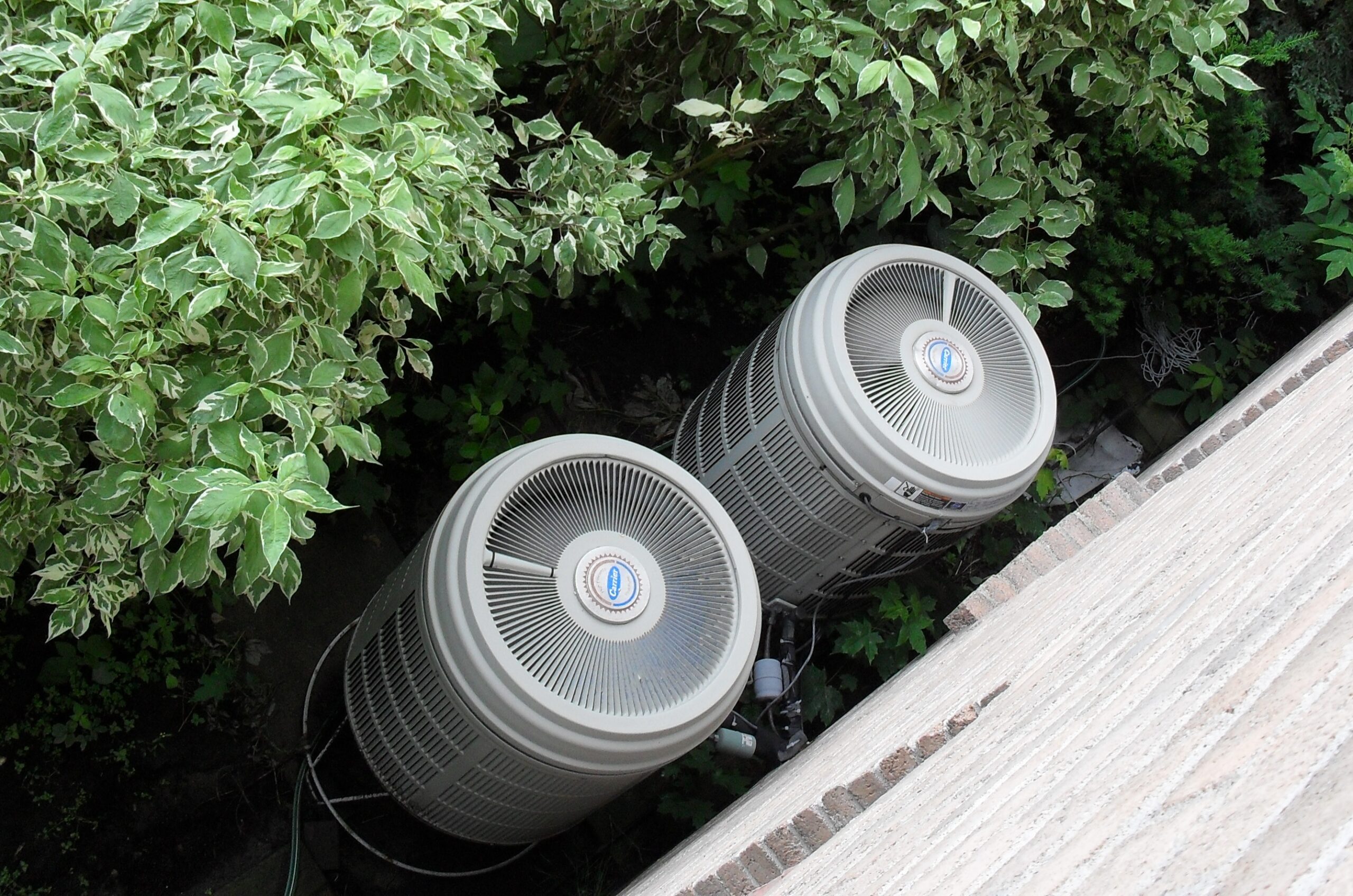
For outdoor equipment, ask the installer to confirm that the proposed location satisfies the selected model’s installation instructions. Daikin’s published guidance addresses airflow clearances, service access, a stable foundation and heat-pump defrost drainage. An existing pad or location should therefore be evaluated rather than automatically reused. (daikincomfort.com)
Keep electrical, gas, refrigerant, roofing and structural work with appropriately qualified professionals; this checklist is for reviewing their scope, not performing that work yourself.
3. Separate ductwork, refrigerant piping and drainage
Do not let “connect to existing” stand in for a condition assessment.
ENERGY recommends evaluating ducts, checking leakage and making necessary repairs. It also identifies airflow and refrigerant charge as important installation-quality checks. Ask each bidder what evaluation and corrective work their price includes. (energystar.gov)
Use separate quote lines for:
| Component | Question to settle in writing |
|---|---|
| Supply and return connections | Which transitions or plenums will be replaced or modified? |
| Existing ducts | What inspection, leakage testing, sealing or insulation work is included? |
| Return-air pathway | Is any modification proposed, and why? |
| Filter arrangement | What cabinet and filter size will be supplied, and where is access? |
| Refrigerant line set | Will it be replaced or reused, and on what manufacturer-approved basis? |
| Condensate drainage | Which drains, pumps or protective devices are included, if applicable? |
Ask for locations and quantities where practical. “Seal identified accessible joints near the air handler” defines a narrower job than “seal the entire duct system.” Neither description should be mistaken for the other.
If a bidder has not inspected concealed ducts or piping, ask them to identify that limitation. A useful response explains what remains unknown, how it will be evaluated and how any additional work will be priced.
4. Clarify electrical, fuel and building work
Ask the bidder to distinguish reconnecting existing services from modifying them. Seattle’s homeowner guidance explicitly includes electrical upgrades among the costs that should be clarified in a heat-pump proposal. (seattle.gov)
Have the quote state whether it includes:
- Evaluation of the existing electrical supply for the proposed equipment.
- New circuits, wiring, disconnects or other electrical changes, where required.
- Any proposed electrical-panel work.
- Thermostat wiring and control changes.
- Gas connection or venting work for a fuel-burning furnace, where applicable.
- Condensate-related work for the selected equipment.
- Wall penetrations, sealing and agreed surface restoration.
- Subcontractor coordination and charges.
Do not assume a heat-pump project automatically requires a panel replacement—or that it can always use the existing electrical installation. Ask for the project-specific assessment and a separately defined scope.
Likewise, “patching included” needs clarification. Ask whether it means closing an opening, finishing drywall, matching texture, painting or exterior restoration. Mark work assigned to you or another contractor as an exclusion so it remains visible in the project budget.
5. Name the permits and inspection responsibilities
Ask the contractor to list the permits applicable to your address, who obtains them, whether fees are included and who schedules inspections.
Named jurisdiction example: Seattle, Washington. As checked on November 22, 2026, Seattle’s Department of Construction and Inspections says furnace replacement or alteration requires a permit, and split-system heat pumps, air conditioners and work involving refrigeration piping require a refrigeration permit. Its guidance also says a licensed refrigeration contractor must obtain the refrigeration permit. (seattle.gov)
Seattle’s heat-pump planning guidance notes that an electrical permit may also be required depending on the work. Its inspection guidance distinguishes cover inspections, before applicable work is concealed, from final inspections after completion. These are Seattle requirements—not a nationwide permit checklist. (seattle.gov)
For your own jurisdiction, request wording that identifies:
- Applicable permit types and fee treatment.
- Responsibility for applications and inspections.
- Responsibility for correcting inspection deficiencies in the installer’s work.
- The records you will receive at completion.
If a quote says “permit by owner” or “permits extra,” resolve the responsibility and cost before comparing its total with a permit-inclusive bid.
6. Include startup testing and handover documents
Ask what the contractor will verify after installation and what results you will receive. ENERGY STAR’s quality-installation guidance calls for airflow that meets manufacturer specifications and testing and adjustment of refrigerant charge for applicable systems. (energystar.gov)
Request a commissioning or startup record appropriate to your equipment, plus:
- Installed model and serial numbers.
- Applicable airflow and operating-check results.
- Confirmation that controls and operating modes were checked.
- Manufacturer manuals and maintenance instructions.
- Warranty documents and any registration responsibilities.
- Permit and inspection records.
Manufacturer documentation provides a useful benchmark. Daikin’s DZ5SE installation reference includes a startup checklist with equipment identification, electrical readings, temperatures, refrigerant-related readings and clearance checks. This illustrates why a documented startup is more informative than a statement that the unit “runs”; the actual checklist should match your equipment. (daikincomfort.com)
If weather prevents a specified test at installation, ask the contractor to document the limitation, the manufacturer-approved approach and whether a return visit is included.
7. Compare the same completed scope: a hypothetical USD example
Illustration only: The following fictional U.S. quotes use USD figures for a November 2026 comparison exercise. They are not Seattle estimates, market averages or recommended prices. Assume identical equipment, equivalent warranties and the same required project work.
| Cost item | Quote A | Quote B |
|---|---|---|
| Equipment package | $5,200 | $5,700 |
| Installation labor and standard materials | $2,000 | $2,100 |
| Removal and disposal | $300 | $300 |
| Permits and inspections | Excluded | $350 |
| Required electrical work | Excluded | $900 |
| Defined duct transition | Excluded | $500 |
| Commissioning and handover | Included | Included |
| Quoted total | $7,500 | $9,850 |
Quote A initially appears $2,350 cheaper.
Now suppose written follow-up prices for A’s excluded work are $400 for permits and inspection coordination, $1,200 for electrical work and $800 for the duct transition.
Comparable Quote A total:
$7,500 + $400 + $1,200 + $800 = $9,900
Under these assumptions, A’s completed scope costs $50 more than B’s, despite its lower equipment price.
The lesson is not that the higher initial bid wins. It is that exclusions must be priced before the totals are comparable. If an excluded task remains unpriced, label the total incomplete, not “cheapest.”
8. Resolve allowances, warranties and exclusions before signing
For each uncertain item, ask the contractor to choose a clear status:
- Included: Defined work covered by the contract price.
- Excluded: Work outside the price, with responsibility identified.
- Not applicable: No work proposed for this project.
- Allowance: A stated budget whose final adjustment method is explained.
For allowances, ask what happens if the actual cost is higher or lower. For concealed conditions, request a process requiring a written description and price before additional work proceeds.
Clarify the manufacturer’s equipment warranty separately from the contractor’s workmanship coverage, as Seattle’s homeowner guidance recommends. Ask about coverage periods, exclusions, claim procedures and any registration or maintenance conditions. (seattle.gov)
Before signing, check the proposal’s total, tax treatment, payment milestones, quote expiration, expected schedule and change-order process. Request the full contract price before uncertain rebates or tax benefits.
Avoid three comparison mistakes: treating a blank line as included, accepting different equipment as equivalent without explanation, and comparing an incentive-adjusted figure with another contractor’s gross price.
Final practical check: Send every bidder the same unresolved questions and request a revised written proposal. Choose only after you can explain what each price includes, what remains outside it and how the completed installation will be verified.